
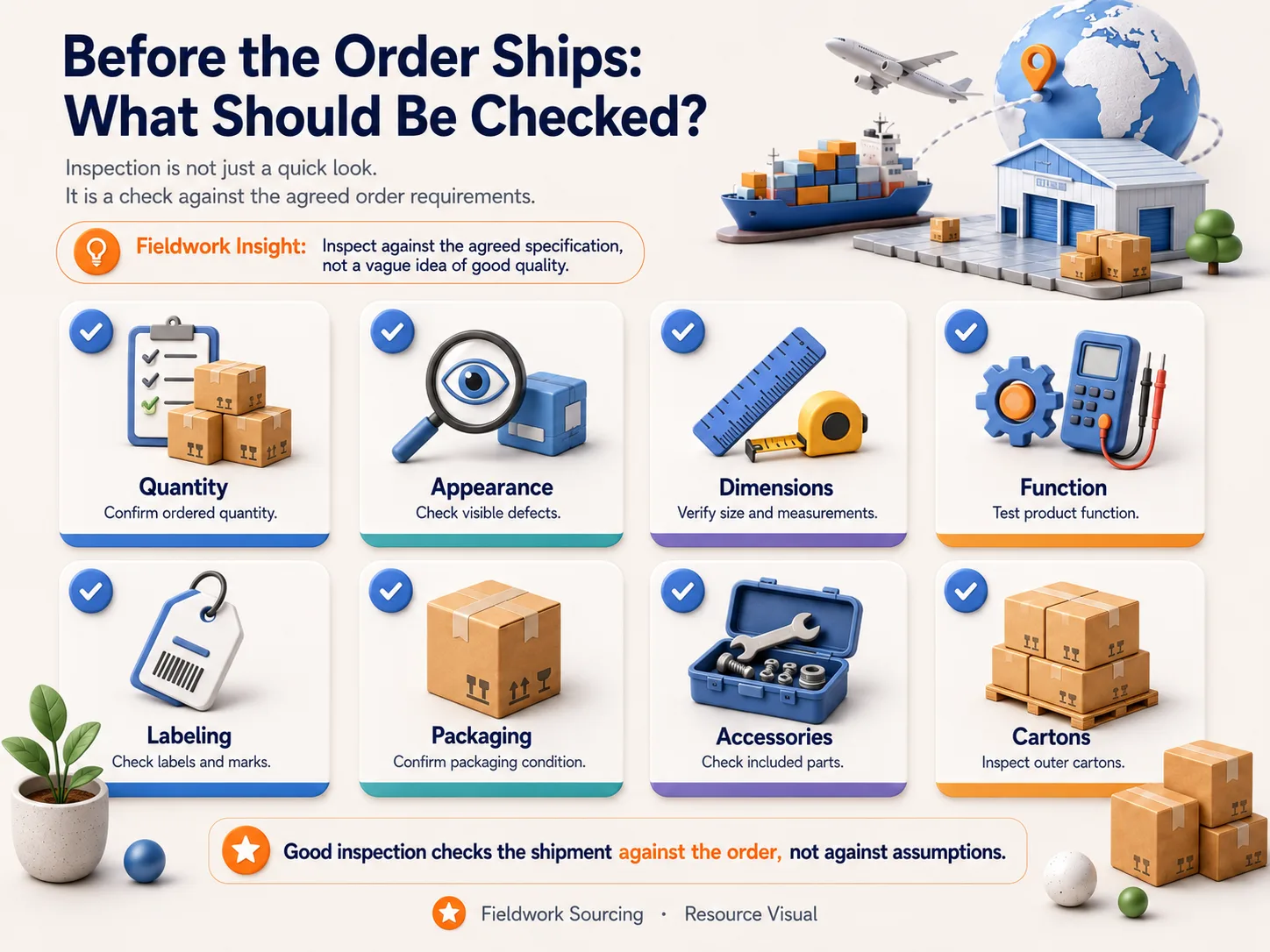
Inspection should follow the agreed specification
A useful inspection is not simply someone looking at the goods and deciding whether they “look good.” The starting point should be the approved specification, sample, packaging requirement and quantity. The clearer these references are, the more objective the inspection can be.
Start with quantity and product identity
Confirm the number of cartons, units per carton, model, color and SKU. Mixed cartons, missing accessories or incorrect variants can create problems even when the physical product itself is acceptable. Quantity and identity checks are basic, but they prevent surprisingly common shipment errors.
Check appearance, dimensions and function
The exact checks depend on the product. Typical areas include surface defects, color consistency, dimensions, weight, assembly, moving parts, switches, fit, finish and basic function. For technical products, some tests may require dedicated equipment or a certified laboratory rather than a normal visual inspection.
Do not ignore labels and packaging
A product can be correct and still create trouble because the label, barcode, instruction manual, inner packaging or export carton is wrong. Check the information printed on the product and packaging, how the goods are protected inside the carton, carton condition and any shipping marks that have been agreed.
Decide what happens when defects are found
Inspection is useful only when there is a response plan. Before the inspection, agree what counts as a defect, which problems require rework or replacement, whether a re-inspection is needed and when the final balance is paid. Finding a problem is only the first half of quality control; resolving it before shipment is the part that protects the order.
 WhatsApp
 WeChat
 Google Email